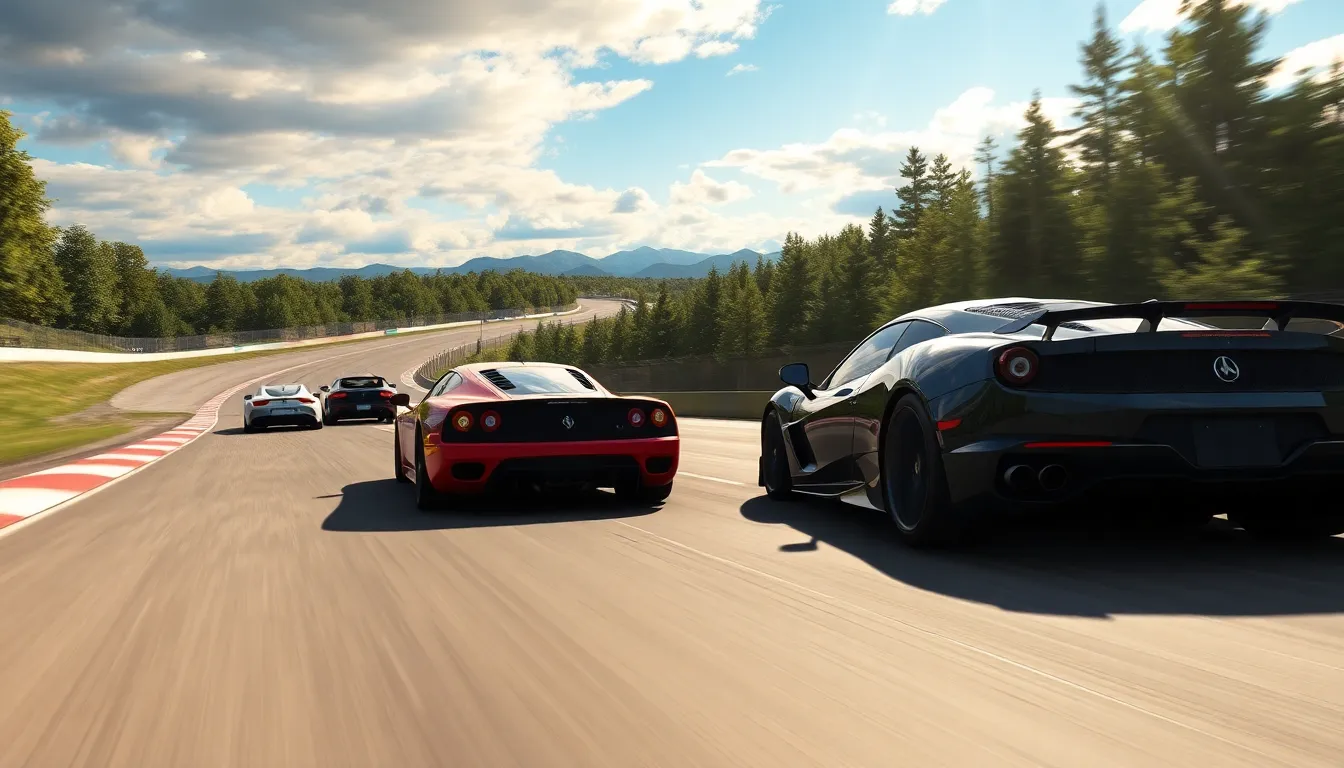
In the world of racing games, feeling the thrill of the track is just as important as the speed of your car. Enter Gran Turismo’s haptic feedback—where every bump, turn, and acceleration comes alive beneath your fingertips. It’s like having a tiny pit crew in your controller, ready to give you the inside scoop on every curve and straightaway.
Imagine gripping the wheel as your car dances over the asphalt, each vibration sending adrenaline coursing through your veins. With haptic feedback, players don’t just play; they experience racing in a whole new way. It’s not just about winning; it’s about feeling like a champion, even if it’s just in your living room. Buckle up and get ready to discover how this cutting-edge technology transforms every race into a heart-pounding adventure.
Overview of Gran Turismo Haptic Feedback
Gran Turismo’s haptic feedback technology enriches the gameplay experience. Players engage with realistic sensations that mirror actual driving conditions. Every bump and turn on the racetrack becomes tangible, adding depth to the virtual racing environment. This feature lets players feel their vehicle’s performance characteristics, such as acceleration and braking.
Haptic feedback creates an immersive atmosphere, enhancing the emotional connection between players and their cars. Players experience vibrations that simulate various terrains, allowing for accurate vehicle responses. Factors like speed and road conditions influence how feedback manifests, making each race distinct.
Advanced gaming hardware often complements this technology, amplifying its effects. Controllers equipped with haptic motors transmit unique sensations, fostering a deeper understanding of vehicle dynamics. Players can detect subtle changes in traction, which impacts their racing strategies.
Innovations in game design continually shape the application of haptic feedback. Gran Turismo developers focus on delivering realistic interactions through sound and visuals. This multimodal approach intensifies the overall gaming experience, as players aren’t just observing; they’re fully participating.
Ultimately, haptic feedback in Gran Turismo transforms the racing genre. It blurs the lines between virtual and real-world driving, making the thrill of competition palpable. This technology not only sets Gran Turismo apart but also elevates the standards for future racing games.
Importance of Haptic Feedback in Gaming

Haptic feedback plays a crucial role in elevating gaming experiences. This technology engages players on multiple sensory levels, creating a more believable interaction with virtual worlds.
Enhancing Immersion
Immersion levels rise as haptic feedback transmits the sensations of racing through the controller. Players feel the road beneath them, creating a sense of connection to the track that standard feedback cannot achieve. When navigating sharp turns or accelerating down a straightaway, the vibrations provide immediate feedback, reinforcing each action. The thrill of speed and the pulse of braking transform the living room into a racetrack. Gamers engage with every aspect of gameplay, leading to deeper emotional involvement. Each race then transitions into a full sensory experience, making the virtual environment feel tangible and alive.
Improving Realism
Realism in gaming gets a significant boost with haptic feedback technology. Players experience nuanced vehicle dynamics as vibrations reflect every change in terrain and speed. Slowing on gravel or speeding on smooth asphalt becomes a visceral experience. This technology mimics the true sensations of driving, allowing players to anticipate how their vehicle behaves under different conditions. Driving through rain or rough patches now offers tactile responses that enhance decision-making. As controllers respond dynamically to in-game situations, players derive more authenticity from their racing experience, ensuring each session feels genuinely unique.
How Gran Turismo Implements Haptic Feedback
Gran Turismo leverages haptic feedback to create a dynamic racing experience. Players feel every detail of the track, intensifying the sense of realism.
Native Features in the Game
Gran Turismo incorporates specific features that enhance haptic feedback. The game replicates vibrations from various terrains, like gravel or asphalt. Players can sense the changes in traction during turns, adding depth to their driving. Additionally, feedback responds to driving conditions, ensuring each race feels unique. Developers designed these features to enrich player interactions, making the simulation more authentic. Realistic sound effects further complement the haptic sensations, amplifying immersion. These elements collectively elevate the overall gameplay, transforming each race into an engaging adventure.
Compatibility with Gaming Controllers
Gran Turismo supports various gaming controllers crafted for optimal haptic experience. Advanced controllers utilize haptic motors that deliver distinct sensations, facilitating a deeper understanding of vehicle dynamics. Each controller responds uniquely to racing conditions, enhancing the connection between player and game. Feedback intensity varies based on actions like acceleration and braking. Compatibility extends to multiple platforms, ensuring widespread access to this technology. As players adapt to using different controllers, they maintain a consistent experience across devices. Integration of these functions highlights the game’s commitment to immersive gameplay.
User Experience and Feedback
Gran Turismo’s haptic feedback technology creates an engaging and immersive experience for players, redefining how racing games are enjoyed.
Player Reactions
Players typically express excitement about the realistic sensations offered by haptic feedback. Enthusiasts report feeling every turn and bump, making races more thrilling. Many appreciate how these tactile responses enhance their connection to the vehicle, leading to improved performance during gameplay. Feedback indicates that sensations, such as braking and acceleration, feel authentic, bridging the gap between virtual and real driving experiences. Some players mention that their enjoyment of the game significantly increases with the detailed feedback. Overall, haptic feedback has become a highlight, with players actively discussing how it transforms their racing adventures.
Professional Reviews
Game critics consistently praise Gran Turismo’s haptic feedback for enhancing realism. Reviews highlight the seamless integration of feedback that allows players to sense different terrains accurately, from smooth asphalt to rough gravel. Many professional gamers note that this innovation elevates the overall gameplay experience, citing its ability to improve vehicle dynamics understanding. Expert analyses reveal that haptic sensations support quick decision-making during races. Reviewers emphasize that this feature sets a new benchmark for racing games, raising expectations for future titles. Overall, the acclaim for haptic technology reflects its crucial role in redefining player interactions in gaming.
Technical Aspects of Haptic Feedback
Haptic feedback technology in Gran Turismo enhances gameplay by delivering realistic sensations through controllers. Players engage with every detail of the racing experience, including the vehicle’s response to road conditions.
Technology Behind Haptic Feedback
Advanced gaming hardware powers haptic feedback features in Gran Turismo. Controllers equipped with specialized haptic motors enable players to feel nuances like tire grip and road vibrations. Real-time data influences these sensations; players receive instant feedback on acceleration, braking, and terrain changes. Innovatively designed algorithms ensure that every bump or turn gets accurately represented. This technology creates a deeper immersion and connection to the driving experience.
Settings and Customization Options
Gran Turismo offers extensive settings that allow players to customize their haptic feedback experience. Adjustments include sensitivity levels and feedback intensity, tailoring the sensations to individual preferences. Players can select different profiles depending on their driving style, enhancing the overall experience. Options for fine-tuning create a personalized environment where players can maximize their immersion. Exploring these features ensures that every race feels unique and responsive, boosting engagement across various gameplay scenarios.
Gran Turismo’s haptic feedback technology represents a significant leap in gaming realism. By engaging players through tactile sensations that mimic real-world driving dynamics, it transforms how they experience racing games. This innovation not only enhances immersion but also fosters a deeper connection between the player and the vehicle.
As players navigate various terrains and respond to dynamic racing conditions, the feedback they receive enriches their gameplay. With advancements in controller technology and game design, Gran Turismo sets a new standard for future racing titles. The excitement and realism offered through haptic feedback ensure that each race is not just a competition but an exhilarating adventure that keeps players coming back for more.